The number everyone compares
I run a pipeline that passes a steady stream of text through a language model around the clock. The bill depends on how much arrives, and I don't control that.
Last week that was about 70,000 requests, 124 million prompt tokens and 12 million output tokens, almost all on DeepSeek V4 Flash. At DeepSeek's own list prices it would have cost about $28, or $46 if all of it had run at peak hours. I've been on one host's promotional prices, and that host has just told its users that model availability and pricing will change soon. So I set out to work out what the same traffic would cost elsewhere.
When I choose a model, every price table leads with dollars per million tokens. Turning it into a monthly projection is the hard part. Prices move, often with little warning. Two models with the same price can use very different numbers of tokens on the same job, and the cheapest host can also be the slowest.
Disclosure: besides the pipeline, I run easiapiai.com, a site that compares AI API prices across labs and hosts. The findings below come from its data and from vendors' own pages, OpenRouter's public listings and Artificial Analysis, as of October 22, 2026. Disclaimer: every cost in this piece is my estimate from published prices and an example workload. Prices, discounts and speeds change daily, so test on your own traffic before you decide.
Prices move, and "introductory" can mean months
Since April, DeepSeek, Google, OpenAI and Anthropic have each repriced their cheap tier, through a price change, a new model at a new price, or both.
| Date (2026) | Vendor | What changed |
|---|---|---|
| Oct 17 | DeepSeek | A new V4.1 Flash build replaced the September one under the same name. Price unchanged; its Artificial Analysis score went from 39 to 45. |
| Oct 7 | Anthropic | Haiku 5.5 launched at $0.10 / $0.50 per 1M tokens, a tenth of Haiku 4.5's $1 / $5, though Anthropic puts the average saving at about 75%, because the new tokenizer uses slightly more tokens per task and prompts over 100K tokens are only 50% cheaper. Prompts over 100K tokens cost $0.50 / $2.50. |
| Sep 22 | OpenAI | GPT-6 Luna launched at $0.10 / $0.50. |
| Sep 10 | DeepSeek | V4.1 Flash replaced V4 Flash at $0.30 / $1.20, announced as "lower API prices". It took effect the day it was announced, and requests to the old model name are now answered by the new model. |
| Sep 2 | Gemini 3.8 Flash launched at an introductory $0.75 / $3.75 until December 31. Its full price is $1.50 / $7.50. | |
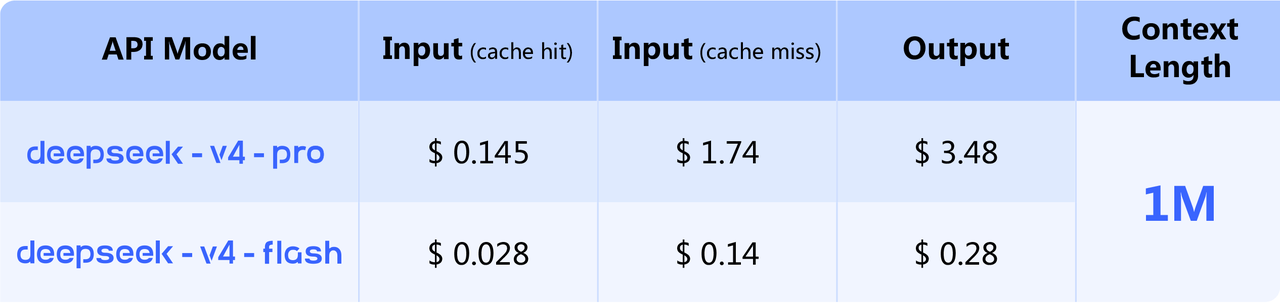
| Aug 16 | DeepSeek | V4 Flash went from $0.14 / $0.28 to $0.44 / $1.32 at peak hours, announced three days earlier. |
| Aug 13 | Gemini 3.7 Flash launched at an introductory half price, with the same December 31 end date. Requests to 3.7 Flash are now answered by 3.8 Flash. | |
| Jul 30 | OpenAI | GPT-5.6 Luna was cut by 80% to $0.20 / $1.20, about three weeks after launch. |
| Jul 21 | Gemini 3.6 Flash launched at $1.50 / $7.50. It now sells at $0.75 / $3.75 until December 31. | |
| Apr 24 | DeepSeek | V4 Flash launched at $0.14 / $0.28. |
Google released three Flash models between July 21 and September 2. 3.6 and 3.8 Flash both sell at half price until December 31, and 3.7 Flash now forwards to 3.8 Flash. At that pace, a newer Flash may replace 3.8 Flash before its full price is ever charged.
Notice can be short. DeepSeek announced its August increase three days ahead, and its September 10 switch took effect the day it was announced. When a lab swaps the model behind a name, as DeepSeek did on September 10 and October 17 and Google did with 3.7 Flash, what you pay for changes even if the price doesn't.
Hosts can move faster. On the morning of October 22 (UTC), OpenRouter showed discounts of 10% to 55% on 8 of the 38 endpoints serving DeepSeek V4.1 Flash and 8 of the 48 serving the full GLM-5.3 model, with no end date in the listing. Between easiapiai's snapshot on October 21 and a check on October 22, the cheapest GLM-5.3 Flash host, Relace, cut its input price by about 70% and more than doubled its output price. A few hours later it changed both again.
Same price, different bill
Artificial Analysis runs every model through the same set of hard reasoning and agentic tests and publishes an estimated cost of one pass, priced from the tokens each model used, thinking included. It shows how much token use can move a bill, which the price per token hides.
- Claude Haiku 5.5 (High) · score 38cost of the run: $94
- GPT-6 Luna (Max) · score 38cost of the run: $122
- MiniMax M3.1 Flash · score 43cost of the run: $283
- GLM-5.3 Flash · score 42cost of the run: $306
- Claude Haiku 5.5 (Max) · score 43cost of the run: $330
- DeepSeek V4.1 Flash, Oct 17 build (Max) · score 45cost of the run: $445
- DeepSeek V4.1 Flash, September build (Max) · score 39cost of the run: $600
- Gemini 3.8 Flash (High) · score 41cost of the run: $1,623
| Model (setting) | Score | List price, in / out per 1M | Output tokens used | Cost of the run |
|---|---|---|---|---|
| Claude Haiku 5.5 (High) | 38 | $0.10 / $0.50 | 97M | $94 |
| GPT-6 Luna (Max) | 38 | $0.10 / $0.50 | 144M | $122 |
| MiniMax M3.1 Flash | 43 | $0.15 / $0.60 | 183M | $283 |
| GLM-5.3 Flash | 42 | $0.15 / $0.50 | 181M | $306 |
| Claude Haiku 5.5 (Max) | 43 | $0.10 / $0.50 | 435M | $330 |
| DeepSeek V4.1 Flash, Oct 17 build (Max) | 45 | $0.30 / $1.20 | 211M | $445 |
| DeepSeek V4.1 Flash, September build (Max) | 39 | $0.30 / $1.20 | 253M | $600 |
| Gemini 3.8 Flash (High) | 41 | $0.75 / $3.75 until Dec 31, then $1.50 / $7.50 | 172M | $1,623 |
| Claude Opus 5.5 (Max), for scale | 58 | $4 / $20 | 260M | $8,708 |
Haiku 5.5 and GPT-6 Luna have the same list price. At its Max setting Haiku used three times as many output tokens as Luna and cost 2.7 times as much, for a score five points higher. At its High setting it matched Luna's score for less.
DeepSeek's October build of V4.1 Flash scored six points higher than the September build and cost 26% less to run, at the same price per token. By price per token, GLM-5.3 Flash and Haiku 5.5 look cheaper than MiniMax M3.1 Flash; by cost of the run, MiniMax ($283) undercuts GLM-5.3 Flash ($306) and Haiku 5.5 at Max ($330), where Haiku matches its score of 43.
Output isn't the whole bill: input and cached tokens make up between about a third and 70% of these costs. The tests are hard, so a simple classification job uses fewer thinking tokens and the absolute costs won't carry over. Artificial Analysis lists Gemini 3.8 Flash only at the introductory $0.75 / $3.75, so its $1,623 most likely uses that price; at full price the run would cost about $3,250.
A worked example: 1,000 posts
I priced 1,000 posts, each with 3,000 tokens of fixed instructions, 1,000 tokens of new text and a 300-token answer, with thinking off. "With cache" bills the instructions at the cache price; "without cache" bills every token as fresh input. Every model gets the same token counts, so the table compares prices, caching and hosts, not how many tokens each model uses.
- GLM-5.3 Flash · Relace, cheapest hostwith cache: $0.09without cache: $0.09
- Haiku 5.5 or GPT-6 Luna · Batchwith cache: $0.14without cache: $0.28
- DeepSeek V4.1 Flash · Decart (fp4)with cache: $0.20without cache: $0.41
- DeepSeek V4.1 Flash · DeepInfra (fp8)with cache: $0.28without cache: $0.69
- Claude Haiku 5.5 · Anthropicwith cache: $0.28without cache: $0.55
- GPT-6 Luna · OpenAIwith cache: $0.28without cache: $0.55
- DeepSeek V4.1 Flash · DeepSeek, off-peakwith cache: $0.34without cache: $0.78
- MiniMax M3.1 Flash · MiniMaxwith cache: $0.38without cache: $0.78
- GLM-5.3 Flash · Z.aiwith cache: $0.39without cache: $0.75
- DeepSeek V4.1 Flash · DeepSeek, peak hourswith cache: $0.68without cache: $1.56
- DeepSeek V4.1 Flash · Together, Fireworks, Parasailwith cache: $0.68without cache: $1.56
- Gemini 3.8 Flash · Google, until Dec 31with cache: Not cached under 4,096 tokenswithout cache: $4.13
- Gemini 3.8 Flash · Google, from Jan 1with cache: Not cached under 4,096 tokenswithout cache: $8.25
| Model | Where | Price per 1M: in / cached / out | With cache | Without cache | Note |
|---|---|---|---|---|---|
| DeepSeek V4.1 Flash | DeepSeek, peak hours | $0.30 / $0.006 / $1.20 | $0.68 | $1.56 | Peak is 01:00–04:00 and 06:00–10:00 UTC on weekdays |
| DeepSeek V4.1 Flash | DeepSeek, off-peak | $0.15 / $0.003 / $0.60 | $0.34 | $0.78 | About 79% of the week; a standing rate, not a promotion |
| DeepSeek V4.1 Flash | Together, Fireworks, Parasail | $0.30 / $0.006 / $1.20 | $0.68 | $1.56 | No off-peak rate |
| DeepSeek V4.1 Flash | DeepInfra (fp8) | $0.14 / $0.0042 / $0.42 | $0.28 | $0.69 | Marked as a 30% discount with no end date; $0.40 / $0.98 without it |
| DeepSeek V4.1 Flash | Decart (fp4) | $0.09 / $0.018 / $0.18 | $0.20 | $0.41 | Lowest output price listed; served in fp4 |
| Claude Haiku 5.5 | Anthropic | $0.10 / $0.01 / $0.50 | $0.28 | $0.55 | Cache writes $0.125; prompts over 100K cost 5x |
| GPT-6 Luna | OpenAI | $0.10 / $0.01 / $0.50 | $0.28 | $0.55 | Cache writes $0.125; cached price only if you mark where the instructions end |
| Haiku 5.5 or GPT-6 Luna | Batch | $0.05 / $0.005 / $0.25 | $0.14 | $0.28 | Answers arrive later; cache hits aren't guaranteed |
| GLM-5.3 Flash | Z.ai | $0.15 / $0.03 / $0.50 | $0.39 | $0.75 | Thinking can't be switched off, so this is a floor |
| GLM-5.3 Flash | Relace, cheapest host | $0.0083 / $0.0083 / $0.1825 | $0.09 | $0.09 | Format not stated; cached tokens cost the same as fresh; always thinks, so a floor |
| MiniMax M3.1 Flash | MiniMax | $0.15 / $0.015 / $0.60 | $0.38 | $0.78 | Always thinks, so this is a floor |
| Gemini 3.8 Flash | Google, until Dec 31 | $0.75 / $0.075 / $3.75 | Not cached under 4,096 tokens | $4.13 | Introductory price; can't switch thinking off, so a floor |
| Gemini 3.8 Flash | Google, from Jan 1 | $1.50 / $0.15 / $7.50 | Not cached under 4,096 tokens | $8.25 | Full price; can't switch thinking off, so a floor |
On most rows the cache halves the bill, because the fixed instructions are three quarters of every request. Where a host prices cached tokens like fresh ones, as the cheapest GLM host does, caching saves nothing. Caching also has minimums: Google caches Gemini 3.8 Flash requests only from 4,096 tokens, so these 4,000-token requests pay the full input price. My own pipeline gets far less from it: last week only about 16% of its prompt tokens were served from the cache.
Anthropic's cache needs care in a slow pipeline. It expires five minutes after its last use, and writing it costs 1.25 times the input price, or 2 times for a one-hour cache. If posts arrive more than five minutes apart, every post pays the write price on its instructions, and 1,000 posts cost $0.63, more than the $0.55 with no cache at all. OpenAI also charges 1.25 times input for cache writes and keeps its cache at least 30 minutes after last use, but reuses the instructions only if you mark where they end. DeepSeek charges no write fee.
The table assumes thinking is off. DeepSeek thinks by default and lets you switch it off. GLM-5.3 Flash, MiniMax M3.1 Flash and Gemini 3.8 Flash can't switch thinking off, so their rows are a floor. Each 1,000 thinking tokens per post adds the output price once per 1,000 posts: $1.20 at DeepSeek's peak rate, $0.50 for Haiku, Luna or GLM-5.3 Flash at Z.ai, $0.60 for MiniMax, $0.18 at the cheapest GLM host and $3.75 for Gemini until December.
At 10,000 posts a day, with a warm cache and no thinking, that is about $84 a month on Haiku 5.5, and $203 on DeepSeek if every post ran at peak, or about $123 spread evenly over the week. Gemini 3.8 Flash at full price can't use the cache here and comes to about $2,475 before thinking.
Priced the same way, my own week (105 million fresh prompt tokens, 19 million cached and 12 million output) comes out like this:
| Where | Cost of my week |
|---|---|
| DeepSeek at peak, or Together, Fireworks and Parasail | $46 |
| DeepSeek off-peak | $23 |
| DeepInfra, discounted | $20 ($28 without the discount) |
| Decart (fp4) | $12 |
| Haiku 5.5 or GPT-6 Luna | $17 |
| GLM-5.3 Flash at Z.ai | $22 |
| MiniMax M3.1 Flash | $23 |
| Gemini 3.8 Flash, introductory price | $137 |
These reuse DeepSeek's token counts. Other labs' tokenizers would count the same text differently, cache writes aren't included, and the models that always think would add output on top. My requests average about 1,800 prompt tokens, under Gemini's cache minimum.
Where you buy changes it again
On October 22, OpenRouter listed 38 endpoints for DeepSeek V4.1 Flash, with output prices from $0.18 to $2.40 per million tokens. GLM-5.3, the full model rather than the Flash version priced above, had 48, from $1.40 to $8.80.
Many of the lowest-priced endpoints run the model in a 4-bit format, and some don't state a format at all. Whether that costs quality depends on the format the lab released, covered below.
Every endpoint carries the same dated model ID, so the listing can't tell you which of DeepSeek's two V4.1 Flash builds a host runs, and those builds score six points apart. One host can also sell the same model at several prices, through priority, flex, spot or fast tiers.
Speed, latency and precision
The cheapest endpoint can also be the slowest, and its precision label says something about quality, though less than it seems.
Speed and latency. Artificial Analysis sends the same requests to every host and reports the median over the past 72 hours. Its terms:
- Output speed: tokens received per second after the first token arrives.
- Time to first token: seconds from sending a request to receiving the first token. For a thinking model, that token is usually part of the thinking.
- Time to first answer token: seconds from sending the request to the first token of the answer, thinking included. This is what a person actually waits for.
- End-to-end response time: the time to receive the whole response, including reading the input, thinking and writing the answer.
On a 10,000-token prompt, DeepSeek V4.1 Flash (October build) ran at 68 tokens per second on DeepInfra, 203 on DeepSeek's own API, 278 on Together AI and 630 on Systalyze. Artificial Analysis estimates a 500-token answer, after about 2,000 thinking tokens, at about 9 seconds end to end on Together AI and 38 on DeepInfra. DeepInfra is one of the cheapest hosts per token, yet Artificial Analysis puts its cost per task at $0.61, against $0.26 on DeepSeek's own API. A background job can live with a slow host; a chat that a person waits on usually can't.
You don't have to pick one endpoint for everything. Work nobody waits on, such as overnight batches or bulk enrichment, can go to a slower, cheaper host, a batch tier or DeepSeek's off-peak hours, while anything a person waits on goes to a faster one. Keep the same model on both, or test the fallback, so the answers stay consistent.
Precision. Hosts can store a model's numbers in fewer bits, so it takes less memory and costs less to serve. This is quantization, and the label on a listing names the format:
| Label | Meaning |
|---|---|
| BF16, FP16 | 16-bit formats. Many open models are released in BF16. |
| FP8 | 8-bit, half the memory of 16-bit. |
| FP4, NVFP4, MXFP4 | 4-bit. NVFP4 and MXFP4 give each small block of numbers its own scale factor, which loses less accuracy than one scale for a whole tensor. |
| INT8, INT4 | 8-bit and 4-bit integer formats. |
| unknown | The host doesn't say. |
The reference point is the format the lab itself released, and it isn't always 16-bit. DeepSeek released V4 Flash with FP4 for its expert layers and FP8 for most of the rest, and its V4.1 Flash weights also store the experts in FP4. OpenAI released gpt-oss with MXFP4 expert weights and ran its evaluations in that format. So fp4 on a DeepSeek Flash listing isn't by itself a downgrade, while fp4 on GLM-5.3, which Z.ai serves in fp8, means the host compressed it further. An fp4 label also can't show whether a host cut DeepSeek's FP8 layers to 4-bit too.
A rough order for choosing a host:
- The lab's own API, or a host serving the format the lab released.
- One step below that, such as fp8 on a model released in BF16. The difference is often small, but test it.
- Further below, such as fp4 on a BF16 or fp8 model. Often the cheapest, with the most room for lost accuracy.
- Format not stated. Some large hosts, Together and Fireworks among them, don't state one on OpenRouter, so this says little either way. Test before you rely on it.
The same format doesn't guarantee the same answers. OpenRouter, which compares hosts with Artificial Analysis, said in October 2025 that it has "on rare occasions seen quality degradation as inference stacks are tweaked", and it reports bigger differences between hosts in tool calling than benchmarks show. In its DeepSeek 3.1 test, the one host serving fp4 stayed competitive. Artificial Analysis says it is still "moving towards full disclosure of quantization methods".
Limits a price table doesn't show:
- Output limit: DeepSeek's own API allows answers up to 384K tokens. On OpenRouter, 6 of the 38 endpoints for V4.1 Flash, DeepInfra's among them, cap answers at 131,072 tokens. Another 18 list 90% of their context window, which looks like a default rather than a tested limit.
- Uptime: over the past day, DeepInfra's flex tier for the same model was up about 89% of the time; most other endpoints were above 99%.
- Features: endpoints support between 11 and 20 request settings, so check that the host supports the tool calls, JSON output or thinking switch you use.
- Data handling: hosts differ in where they run and what they keep from requests, which matters if your data is sensitive.
What I do about it
None of these prices is wrong, but none of them is stable enough to plan a year on. This is how I budget around that:
- I measure cost per item on my own traffic, with the thinking setting fixed, and measure again after any model or price change.
- I budget at the price that applies after an introductory rate or host discount ends, and count the promotion as a bonus while it lasts.
- I keep the fixed instructions identical across requests so the cache can hit, and I check how long each vendor keeps it.
- I keep a second model tested and ready, because a price change or a swapped model can arrive with days of notice.
- I compare hosts as well as labs. easiapiai.com tracks prices across hosts and marks promotions where vendors publish them.
Sources
- DeepSeek: current pricing and off-peak hours, V4 launch prices, August price change notice, V4.1 Flash release, thinking mode, V4 Flash weights
- Anthropic: pricing, prompt caching, Haiku 5.5 launch, Haiku 4.5
- OpenAI: pricing, changelog, prompt caching, gpt-oss-120b weights
- Google: Gemini 3.6 Flash, Gemini 3.7 Flash, Gemini 3.8 Flash, pricing, caching, thinking, deprecations
- Z.ai: pricing, GLM-5.3 Flash thinking; MiniMax: M3.1 Flash
- Artificial Analysis: V4.1 Flash builds, V4.1 Flash vs GPT-6 Luna, Haiku 5.5 settings, Gemini 3.8 Flash vs GLM-5.3 Flash, MiniMax M3.1 Flash, Opus 5.5, performance methodology, provider pages for DeepSeek, Together AI and DeepInfra
- OpenRouter: endpoint listings for DeepSeek V4.1 Flash, GLM-5.3 Flash and GLM-5.3; provider variance
Related: DeepInfer: why DeepSeek gave away its inference engine